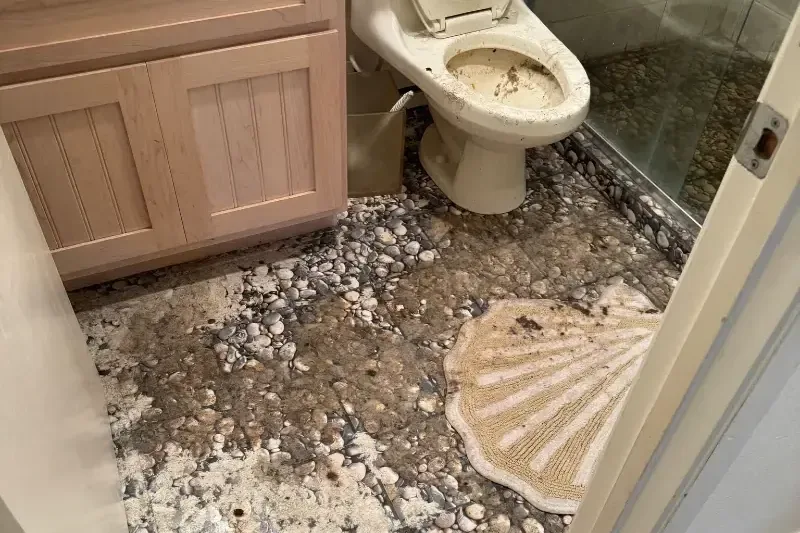
Heavy rain does more than fall on roofs and streets. It loads the sewers, and when the pipes fill, wastewater can push back toward a building instead of flowing away. In Jamaica Plain, a neighborhood of Boston where triple-deckers filled the streets from the 1870s into the early 1900s, a basement drain is often the lowest opening a backed-up sewer can reach.
Key takeaways
- Overloaded sewers can back up into unprotected basements during storms, and a backwater valve is the device built to block that.
- The valve sits in a pit in the basement floor and the owner maintains it, so it protects a home only while it is clear and working.
- Sewage is Category 3 water from the start, so carpet, pad, drywall and cardboard that soaked in it are usually removed, not dried.
- Stop using water in the building as soon as a drain gurgles or rises, because every gallon sent down adds to the backup.
- A backwater valve does nothing about groundwater, a burst pipe or a failed sump pump, so a wet basement can have more than one cause.
Why storms push sewage toward a Jamaica Plain basement
Boston receives about 43.6 inches of precipitation in a year and is very prone to nor'easters. A storm of that kind sends a great deal of water into street drains and sewers in a short span.
Overloaded sewers can back up into unprotected basements during storms. The wastewater has nowhere else to go, so it rises in the pipe until it finds a low opening such as a floor drain, a basement toilet or a laundry sink.
Several early signs separate a sewer backup from other kinds of basement water.
- A floor drain that gurgles or bubbles during or after heavy rain.
- Toilet water that rises or bubbles when a sink or washer drains upstairs.
- A sour sewer smell near a basement drain or utility sink.
- Dark, cloudy water coming up through a drain instead of in through a wall.
What a backwater valve does and what it leaves alone
A backwater valve is a one-way device in the building's sewer pipe. It lets wastewater leave the building and closes if the flow reverses, so an overloaded sewer cannot push wastewater back inside.
The valve sits in a pit in the basement floor, and the owner maintains it. A valve that is clogged with debris, or has never been checked, may not close when it is needed.
What the valve protects
It is built to shield the drains and fixtures in the basement, which are the openings a backed-up sewer reaches first.
- Floor drains in the basement or utility room.
- A basement toilet or utility sink.
- The drain for a washer or laundry tub.
What the valve cannot stop
The valve closes one path only. Water can still arrive from several other directions.
- Groundwater or rain seeping through basement walls or the floor.
- A burst pipe or a failed water heater inside the house.
- A sump pump that stops during a power outage.
- A roof or window leak that runs down into the basement.
First steps when a drain starts to back up
The first goal is to keep more water out of the building's pipes and keep people away from contaminated water. Good records matter as much as speed, because the cleanup and any insurance claim both depend on them.
- Stop using sinks, tubs, toilets, dishwashers and washers until the drain clears.
- Keep children, pets and anyone with a weak immune system out of the area.
- Stay out of standing water that reaches outlets, cords or appliances, and leave the electrical panel alone if the floor around it is wet.
- Do not run a household vacuum or a fan through the water.
- Photograph the water level, the drain and any damaged belongings before anything is moved.
- Reach a restoration crew early so sewage backup cleanup can begin while the water is still on the surface.
Why sewage is handled as Category 3 water
Under the IICRC S500 standard, water from a sewer backup is Category 3, which means it is grossly contaminated from the start. It does not matter how clear the water looks, and the rating can only get worse as it sits.
A mop and household bleach will not make the space safe. Sewage carries harmful microbes that soak into porous materials, and surface wiping cannot reach them.
Those porous materials are usually removed and discarded, while hard sealed surfaces can often be cleaned and disinfected.
- Carpet, pad and area rugs: removed.
- Drywall and insulation that wicked up the water: cut out above the wet mark.
- Sealed concrete or tile: cleaned, then disinfected.
- Wood framing: cleaned, disinfected and dried until the readings match a dry reference.
- Stored cardboard, fabric and paper: usually discarded after photographs are taken.
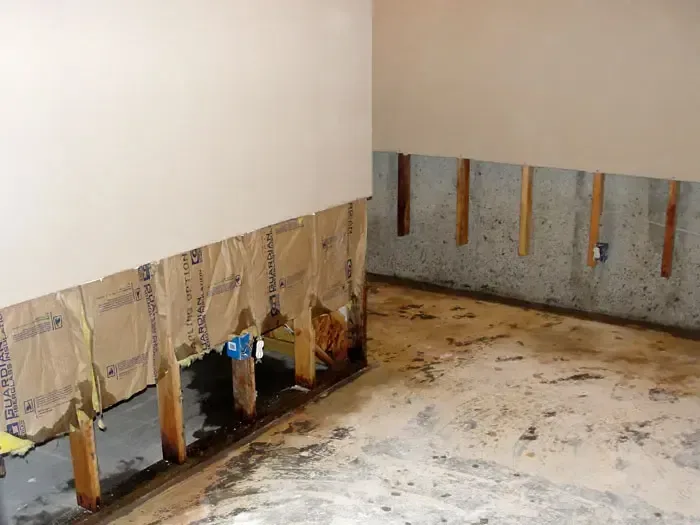
How the cleanup runs, step by step
A sewage cleanup follows a set order, and skipping a step leaves contamination behind.
Removal and extraction
The extraction crew pumps out standing water and bags contaminated materials for disposal. Plastic barriers separate the work area from the rest of the home so dust and odor do not travel.
Cleaning and disinfecting
Surfaces are cleaned before they are disinfected, because a disinfectant cannot work through soil. Floors, the drain area and the lower part of the walls get the most attention.
Drying and clearing
Once surfaces are clean, the drying team sets dehumidifiers and air movers and takes moisture readings at each visit. Drying promptly matters because mold can begin to grow in 24 to 48 hours on damp materials.
- Readings are repeated until the wet materials match a dry reference.
- Equipment comes out only after the final readings are recorded.
A backup and a wet basement after the same storm
A single storm can cause both a sewer backup and seepage through the walls. The two are handled differently, so the crew checks where each batch of water entered before deciding what can be saved.
Water that came up through a drain is treated as Category 3. Clean rain or groundwater that seeped in is handled as part of basement flooding cleanup, and when storm runoff is mixed in, the work follows the rules for storm flood cleanup.
Mixed water takes the higher category.
After the cleanup: checking the valve and planning for the next storm
Once the space is clean and dry, a plumber can check whether the backwater valve closed, whether debris sits in the pit and whether the valve needs service. Because the owner maintains it, a regular check belongs on the household calendar.
Coverage for a sewer backup depends on the policy, and some policies treat backups separately from other water damage. Photographs, moisture readings and a list of discarded materials help support a claim, and the water damage cost calculator gives a rough sense of scale before an estimate.
- Keep the pit cover clear of stored boxes so it can be reached.
- Ask the plumber how to test the valve and how often to check it.
- Note the date of each service so the record is easy to find.
- Watch basement drains during the next hard rain and act at the first gurgle.
Questions
What is a backwater valve?
A backwater valve is a one-way device in the building's sewer pipe. It lets wastewater flow out and closes if the flow reverses, so an overloaded sewer cannot push wastewater back into the basement.
Who maintains a backwater valve?
The owner does. The valve sits in a pit in the basement floor and needs to be kept clear and checked, since a clogged valve may not close.
Can carpet be saved after a sewage backup?
Usually not. Carpet and pad are porous and sat in Category 3 water, so they are normally removed and discarded. Hard sealed surfaces can often be cleaned and disinfected.
Is a sewage backup the same as basement flooding?
No. Rain or groundwater is one kind of problem. A backup brings wastewater up through a drain and is contaminated from the start. A basement can have both problems after a storm.
How long does sewage cleanup take?
Removal and cleaning usually take a day or two, and drying runs several days. The time depends on how far the water spread and what the moisture readings show.