
On January 14, 2023, a 36-inch water main broke on Heath Street and flooded Heath, Waldron and Minden streets. A break of that size shows how fast public water can leave a pipe, cross a street and look for the lowest door, window or stairwell it can find.
Key takeaways
- A 36-inch main break on Heath Street flooded Heath, Waldron and Minden streets on January 14, 2023, so street flooding from a public main is a real local event.
- Water that has crossed a street can carry dirt, oil and sewage from drains, so it is treated as contaminated until the restoration team says otherwise.
- Extraction comes first, because standing water keeps wicking into plaster, wood and masonry while it sits.
- Porous materials that sat in street water, such as carpet, pad and cardboard, are usually removed rather than dried.
- Photographs, moisture readings and a written list of damaged items protect an insurance claim and keep repairs on track.
What the Heath Street break showed about street flooding
The January 14, 2023 break involved a 36-inch main, a large pipe in the public system. When a pipe that size fails, water does not trickle.
It spreads across pavement, follows the slope of the street and collects at low points.
Heath, Waldron and Minden streets were flooded as a result. A building on a street like that has doors, steps, windows and drains near the water, and those are the places street water tends to get in.
A street flood is also a utility event. The water system is public, so a household's role is to protect the building and the record, not to repair the main.
- Through a door or threshold set below the water level of the street.
- Down exterior stairs into a lower-level entrance.
- Through basement windows and window wells.
- Up through floor drains when a sewer is overloaded.
- Through gaps around pipes and cables where they pass through a foundation wall.
Why water from a main is treated as contaminated
Water leaving a public main starts out as clean supply water. Once it runs across a street it can pick up soil, road oil, trash and, where drains overflow, sewage.
Under the IICRC S500 standard, floodwater like that is Category 2 or Category 3 rather than clean Category 1 water. The category matters because it decides which materials can be dried and which must go, so the restoration team treats the water as contaminated from the start.
First steps indoors while the street is still wet
These steps keep the household safe and keep the record clear. None of them needs special equipment.
- Stay out of standing water that reaches outlets, cords or appliances.
- Leave the electrical panel alone if the floor around it is wet, and keep anyone from walking through the water to reach it.
- Move valuables, papers and electronics to a higher shelf or floor only if the path is dry and safe.
- Keep children and pets out of the affected rooms.
- Photograph the waterline on the walls, the standing water and damaged items before anything is moved.
- Write down what was in the room, because a list helps with an insurance claim.
Moves that make street flood damage worse
Some well-meant moves add to the damage or put people at risk. A short wait costs more than it seems, because moisture keeps moving into plaster and wood while the water sits.
- Running a household vacuum or a fan through standing water.
- Leaving wet carpet or pad in place to dry on its own, which keeps moisture against the floor.
- Waiting for the street to drain before checking the lower floor.
- Throwing away damaged items before photographing them.
- Mixing cleaning products in a flooded space.
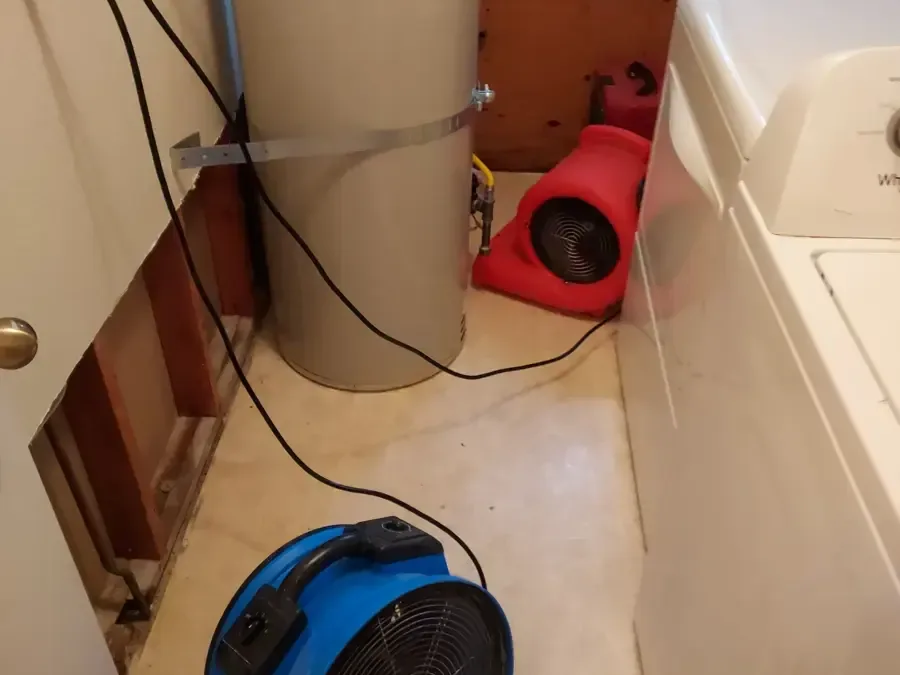
What the extraction crew does first
Extraction is the first job because every hour of standing water pushes moisture deeper into the building.
Pulling the water out
The extraction crew uses truck-mounted and portable units to remove standing water from floors, rugs and low rooms. Getting the water out early limits how far it wicks into plaster, wood and masonry.
See how water extraction works for a lower floor.
Removing what cannot be dried
Carpet, pad, cardboard and soft furnishings that sat in street water are usually bagged and removed. Wet drywall and insulation above the waterline are cut out so the wall cavity can dry.
- Rugs and pad: removed.
- Insulation: removed where it is wet.
- Plaster and drywall: checked, then kept or cut out based on readings.
Drying a triple-decker's lower unit
Triple-deckers appeared in the 1870s and spread rapidly in the 1890s, and they line many of the neighborhood's streets. A flood at street level mostly threatens the lowest unit, the shared entry and the utility spaces, while the upper units stay out of the water.
Drying runs on readings, not on the calendar. The drying team sets LGR dehumidifiers and air movers, records moisture in framing, plaster and masonry at each visit, and works toward a dry reference within 2 to 4 points.
Read how structural drying is set up, or use the drying time estimator for a rough picture.
- Floors and lower walls are mapped first because water wicks upward.
- Plaster and masonry hold moisture longer than framing, so they get extra checks.
- Equipment stays until the final readings match the dry reference.
Records for the insurer, the owner and the building
Insurers look for proof of what the water reached and when. The restoration team keeps readings, photographs and a material list that show the extent of the loss.
In a multi-unit building, the owner, the tenants and any condominium association may all need the same record. A basement or lower unit that took on water is also covered under basement flooding cleanup.
- The date and time the water was first noticed.
- Photographs of every affected room before cleanup.
- A list of discarded items with rough values.
- Moisture readings from the first visit and the final visit.
Questions
Is water from a broken main safe to touch?
It starts out as supply water but picks up contamination as it crosses a street, so it is treated as Category 2 or Category 3 until shown otherwise. Avoid skin contact and keep children and pets away.
Does a main break in the street mean a basement will flood?
Not always. It depends on how deep the water gets, where the building has openings and how fast the water spreads. Entrances and windows near street level give water more ways in.
Can wet plaster walls be dried?
Often yes, when the water was removed early and the plaster is sound. Long soaking can loosen plaster, so the crew checks readings and the surface before deciding what to keep.
What should be photographed before cleanup starts?
The standing water, the waterline on walls, damaged furniture and belongings, and any entry point such as a door or window. Wide shots show the room, and close shots show the damage.
How long does drying take after a flood?
Drying often runs several days. Readings decide, not the calendar, and thicker materials such as plaster and masonry take longer than framing.
Who repairs the main after it breaks?
Repairing a public main is a utility job. A household's part is to protect the building, document the damage and start cleanup.