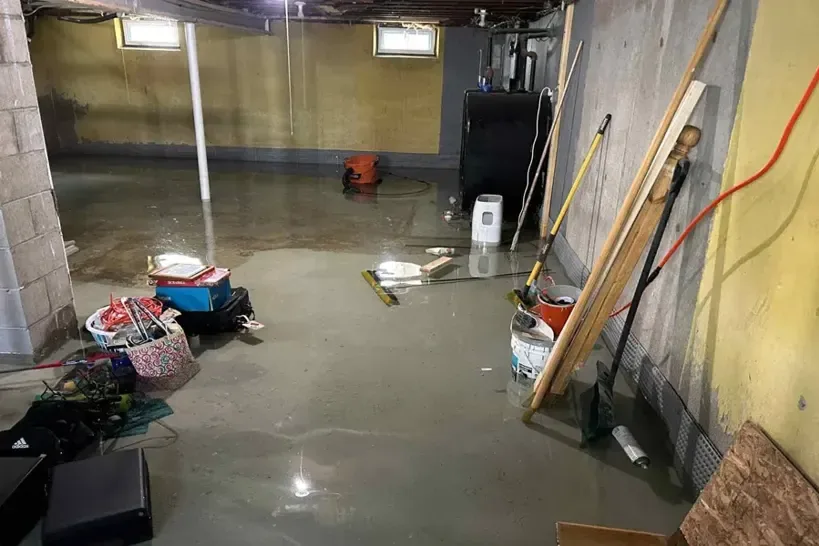
On Thursday, September 14, 2023, a water main break in Mattapan flooded several homes and streets, spreading from Lorna Road to nearby Lena Terrace and West Selden Street. One resident reported more than a foot of water in a garage and basement while the power was out and the water was shut off.
Key takeaways
- The Lorna Road break of September 14, 2023 spread water from Lorna Road to Lena Terrace and West Selden Street.
- One resident reported more than a foot of water in a garage and basement with the power out and the water shut off.
- A sump pump runs on electricity, so it stops when the power does, just when the water is rising.
- Water and household power do not mix: stay out of standing water that reaches outlets, cords or appliances.
- Extraction can begin with equipment that does not rely on building power, while drying equipment needs safe electricity.
What happened on Lorna Road in September 2023
On Thursday, September 14, 2023, a water main break flooded several homes and streets in Mattapan. The water spread from Lorna Road to nearby Lena Terrace and West Selden Street.
The Boston Fire Department said the break happened while crews were working to put out a fire on Lorna Road, and neighbors said it came after firefighters opened a hydrant. The Boston Water and Sewer Commission said only that there was some problem with the fire hydrant in the area, and the cause was still under investigation the night of the break.
A neighbor said the street cracked at one spot near the break, and crews brought a potable water station for residents.
What a foot of water means for a garage and lower level
One resident near the break reported more than a foot of water in a garage and basement, with the power out and the water shut off. That combination makes a flooded lower level harder to handle.
Water that deep reaches more than the floor. It gets into outlets, appliances and anything stored low, and it soaks the bottom of the walls.
- Outlets and power strips at or near the floor.
- Washers, dryers, freezers and water heaters that stand on the floor.
- Boxes, tools and seasonal items stored low.
- The bottom of drywall and any wood trim.
Why a power outage makes the water worse
A sump pump is an electric pump that moves water out of a pit. When the power goes out, a plain electric pump stops, and if water is rising at that moment nothing is pushing it back out.
A pump with a battery backup can keep working for a time, but the backup runs down. A household that relies on a pump should know which kind it has.
The Lorna Road flood left one household without power, a reminder that this can happen in a street main emergency as well as in a rainstorm.
More on what happens after a pump quits appears under sump pump failure cleanup.
Safety first when water meets electricity
Electrical hazards come before cleanup, because a flooded outlet or cord can be live even when the lights are off.
- Do not wade into standing water if it reaches outlets, cords, appliances or the panel.
- Leave the main breaker alone if the panel is in or near the water.
- Ask the utility or an electrician to make the panel safe before power is restored.
- Keep children and pets out of the flooded area.
- Never run a generator or other gas-powered equipment in a garage or basement.
No power, no water: how the cleanup adapts
A loss without power or water service changes the order of the work, but not the goal of getting water out and drying the structure.
Extraction without household power
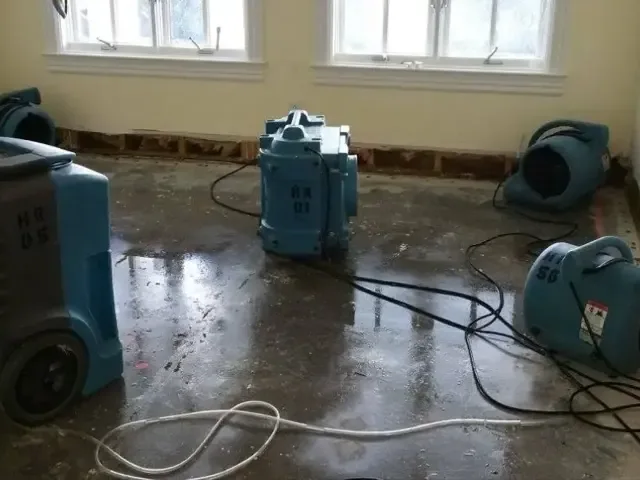
Extraction can begin with equipment that does not depend on the building's electricity. The extraction crew works from the deepest point and moves water out of the garage and lower level.
Drying once power is safe
Dehumidifiers and air movers need electricity, so drying starts when power is safe to use. Until then, the crew removes wet materials and opens walls so less water sits in the building.
Living without water service
When the water is shut off, a household cannot flush toilets or wash up. On Lorna Road, crews brought a potable water station for residents.
Household water needs for cleaning should wait until service is back.
Pumping out the garage and lower level
Extraction works from the deepest point toward the exit. Water is removed from the floor and from carpet, rugs and stored items that can hold it.
The work is described under basement flooding cleanup and water extraction.
Garage floors and lower-level floors may be sealed or finished, and the finish decides how the water is dried. Moisture readings in walls and flooring set how long drying runs.
- Standing water is removed first, then wet items are carried out.
- Stored cardboard and paper are photographed, then discarded if soaked.
- The bottom of walls is checked with moisture meters, and wet drywall is cut out.
- Flooring is lifted if water is trapped under it.
Records after a public main break
After a public main break, the cause can take time to sort out. In the Lorna Road case it was still under investigation the night of the break, and households did not have to wait for an answer to document their own damage.
- Photographs of the waterline and the standing water.
- The date and time the power went out and the water was shut off.
- Notes on any contact with the utility or the city.
- A list of damaged belongings with rough values.
Questions
Does a sump pump work during a power outage?
A plain electric pump does not. When the power goes out, it stops. A pump with a battery backup can keep working for a time, but the backup eventually runs down.
Is it safe to enter a flooded garage after a main break?
Not if the water reaches outlets, cords or the panel. Wait until the power is made safe by the utility or an electrician, and keep children and pets out.
How deep does water have to be before cleanup is needed?
Any standing water in a lower level needs attention, because it soaks into drywall, trim and stored items. At more than a foot, it reaches outlets and appliances and calls for quick extraction.
What caused the Lorna Road break?
The cause was still under investigation the night of the break. The Boston Fire Department said it happened while crews were working on a fire, neighbors said it followed the opening of a hydrant, and the Boston Water and Sewer Commission said only that there was some problem with the hydrant.
Can drying equipment run without household power?
Dehumidifiers and air movers need electricity, so drying waits until power is safe. Extraction and removal of wet materials can start sooner and reduce how much water the building holds.