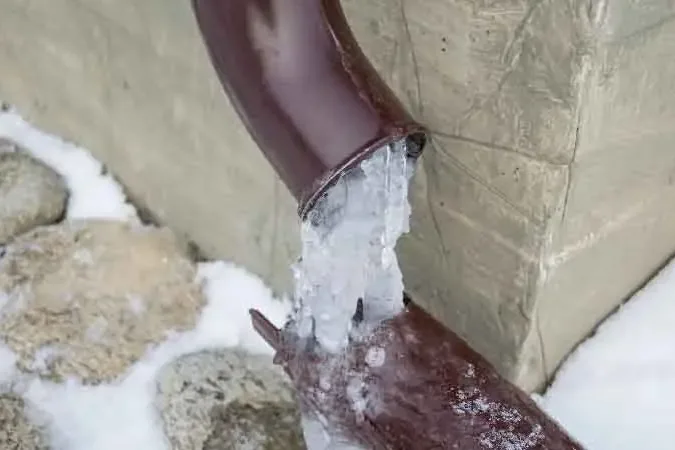
In January 2025, a 6-inch hydrant gate valve failed near Catherine Street and Bourne Street in Roslindale, flooding the street and leaving about 50 homes without water. Temperatures were in the single digits, so the floodwater froze and left icy conditions.
Key takeaways
- A January 2025 valve failure near Catherine Street and Bourne Street froze floodwater in single-digit cold, a reminder of what extreme cold does to water.
- Water expands as it freezes, and the pressure can split a pipe or a fitting, often where the pipe runs through a cold wall or space.
- A frozen pipe often does not leak until the ice melts, so the water damage can start during the thaw.
- Shut off the water first, then thaw gently, and never use an open flame.
- If a pipe has already split, extraction and drying begin as soon as the water is stopped.
The Catherine Street and Bourne Street valve failure
In January 2025 a 6-inch hydrant gate valve failed near Catherine Street and Bourne Street in Roslindale. The failure flooded the street and left about 50 homes without water.
The Boston Water and Sewer Commission said it was a valve failure, not a water main break. Temperatures were in the single digits, so the floodwater froze and left icy conditions.
The event is a reminder of how cold changes the problem. Water that would run off in mild weather freezes and stays, and the same cold works on pipes and fittings indoors.
How freezing weather stresses pipes and fittings
Water expands when it turns to ice. Inside a pipe, that expansion builds pressure between the ice and a closed faucet, and the pipe or a fitting gives way at its weakest spot.
Pipes are most at risk where cold air reaches them, so the weak points sit in a handful of places.
- Pipes inside exterior walls.
- Supply pipes under sinks on outside walls.
- Pipes in unheated basements, porches or entries.
- Outdoor faucets and the pipes just behind them.
Spotting a frozen pipe before it splits
A pipe that is frozen but not yet split still holds water, so the answer is a safe thaw. A pipe that has split leaks as the ice melts.
- A faucet that runs a trickle, or nothing, while the rest of the house has water.
- Frost on an exposed pipe or a visible bulge in the metal.
- A cold spot on a wall or cabinet where a pipe runs behind it.
- Sudden loss of water pressure at one fixture during a hard freeze.
Thawing safely and shutting off the water
The order matters: stop the water, then warm the pipe.
Before thawing
Find the main shutoff and close it. That way, if the pipe has already split, melting ice will not turn into a flood.
- Open the faucet so melting water and steam have somewhere to go.
- Keep a bucket and towels close.
Safe thawing
Warm the pipe slowly, starting near the faucet and working toward the frozen section.
- Use a hair dryer, a heating pad or warm towels on the pipe.
- Never use a torch, an open flame or a kerosene heater.
- Stop and shut off the water at once if a leak appears.
- If the frozen part cannot be reached, leave the thaw to a plumber.
Why the damage often shows up during the thaw
While the ice holds, a split in the pipe is plugged by the ice itself. When temperatures rise and the ice melts, water runs out through the split under full pressure.
A thaw can arrive overnight or while the household is away, so a small crack can become a large leak before anyone notices. The weather warming up is the signal to check.
- Walls and ceilings below any pipe in an exterior wall.
- Cabinet floors under sinks on outside walls.
- Unheated entries and porches.
- The area around the main shutoff.
When the pipe has already split
A split pipe leaks as the ice melts, and the water can run inside a wall for some time before it shows. Stains, bubbling paint and the sound of running water behind a wall are signals.
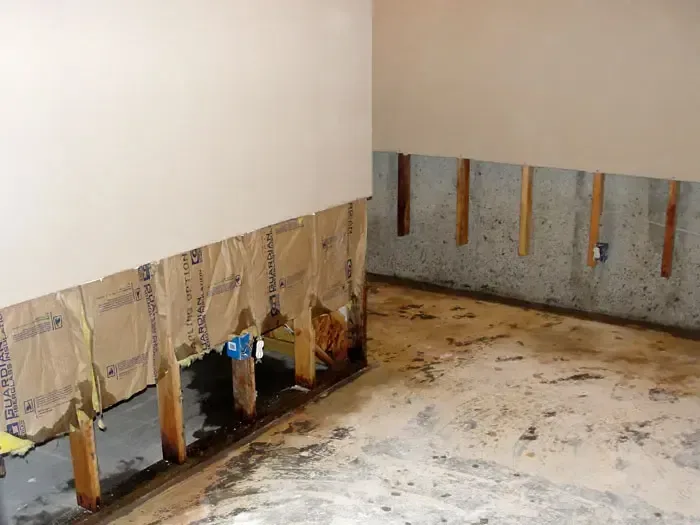
Shut off the main, photograph the damage and reach a restoration crew. The extraction crew removes standing water, then the drying team opens wet walls and floors so the cavity can dry.
The sequence is laid out under frozen pipe water damage and burst pipe water damage, with water extraction covering the pumping stage.
Insulation, drywall and flooring below the split are the usual casualties, and they are the first materials checked.
- Standing water is extracted from floors and carpet.
- Wet insulation and drywall are cut out where water is trapped.
- Walls are dried with dehumidifiers and air movers and checked with moisture meters.
- A plumber repairs the pipe before the walls are closed up.
Two and three family houses: who to tell
Northern Roslindale has dense two and three family residences, and a split pipe in one unit can reach the unit below. The household where the pipe split should tell the other households at once so they can check ceilings and walls.
Sharing information early avoids a second loss from water that is hidden above a ceiling.
- Where the shutoff valve is.
- Photographs of the damage in every unit.
- A list of damaged belongings.
- The date and time the pipe was found to be split.
Before the next cold snap
A few habits lower the risk. The frozen pipe risk check helps spot weak points, and the Roslindale water damage pages cover local cleanup.
- Keep the heat on and set to a safe temperature when away.
- Open cabinet doors on outside walls so warm air reaches the pipes.
- Let a faucet drip during extreme cold.
- Disconnect and drain outdoor hoses before winter.
Questions
Will a frozen pipe always burst?
No. Many freeze without splitting, but the ice can crack a pipe or fitting, and the leak shows only when the ice melts. That is why shutting off the water before thawing is the safest order.
Can a hair dryer thaw a frozen pipe?
Yes, used on low heat and moved along the pipe. Start near the faucet and work toward the frozen section, and keep the faucet open so melting water has somewhere to go.
What should be done right after a pipe bursts?
Close the main shutoff, photograph the damage and move belongings away from the water. Then reach a restoration crew so standing water is extracted and wet materials are opened and dried.
Was the January 2025 event a frozen pipe?
No. It was a failed hydrant gate valve, and the Boston Water and Sewer Commission said it was a valve failure, not a water main break. It is used here only as a local reminder of how single-digit cold affects water.
Does insurance cover a frozen pipe?
Coverage depends on the policy and the cause. Many policies cover sudden pipe damage, and photographs and moisture readings help support a claim.
Should a faucet be left dripping in extreme cold?
A slow drip keeps water moving and can help prevent a freeze, but it does not replace heat, insulation and a plan for shutting off the water.