Basement Flooding Cleanup in Mission Hill, MA
Where a unit or building has a basement level, water there gathers fast and sits against old stone. The crew pumps it out, removes what is ruined and dries the walls and floors with readings logged.
(888) 480-6221Call about the flooded lower level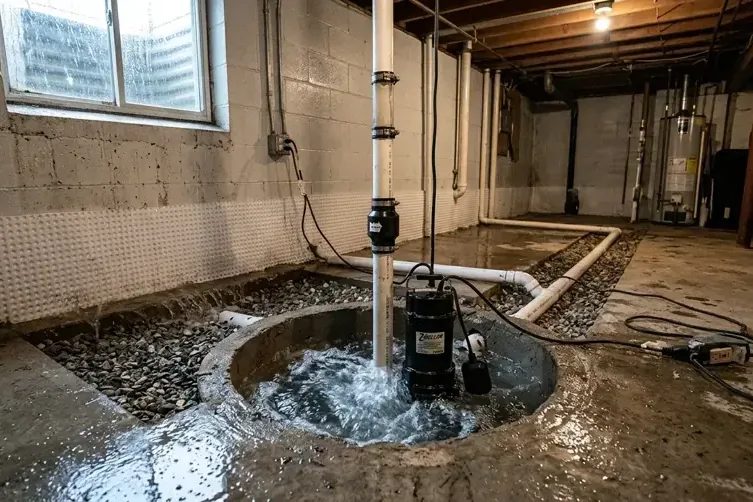
First steps for basement flooding cleanup in Mission Hill
- Stay out of the water. Keep out until power to the area is off, since outlets near the floor can energize it.
- Save what is dry. Carry boxes and electronics upstairs if the stairs are safe.
- Photograph the damage. Record the height of the water on walls and each damaged item before discarding anything.
- Call the crew. Call for pumping, then tell the insurer, and report street flooding to 311.
How basement flooding cleanup is handled, start to finish
Pump out
Water is removed from the deepest point first.
Clear and sort
Debris and ruined contents are removed.
Dry stone and floor
Dehumidifiers pull moisture from masonry and wood.
Confirm
Readings show when each surface is dry.
Most of the neighborhood's late-19th-century houses were built on foundations of puddingstone from a large quarry between Tremont Street and Alleghany Street. Stone and old mortar take up water and give it back slowly, so a lower level that has flooded needs more than a pump to recover.
Where the water comes from
Lower-level water can come from groundwater, storm runoff, a failed pump or a broken supply or drain. The crew identifies which one it is, because clean water, storm water and sewage each call for a different level of removal and protection.
Lower-level water climbs the walls and soaks stored items, so pumping is worth starting early.
(888) 480-6221Get pumps on the jobWhat the cleanup covers
- Pumping out standing water and clearing silt and debris
- Sorting contents into dry, salvageable and ruined
- Removing wet carpet, padding, drywall and insulation
- Drying stone, concrete and wood with dehumidifiers and air movers
Reporting flooding in Boston
The City of Boston Flood Info page on Boston.gov serves residents of basement-level apartments, property owners and businesses, and flooding can be reported by calling 311 or submitting a service request. For sewage, see sewage backup cleanup.
What does basement flooding cleanup cost in Mission Hill, MA?
Cleanup cost climbs with the depth of the water, whether the lower level is finished and what the water carried in. Clean groundwater costs less than storm water or sewage.
Unfinished, clean water
- Pump-out of standing water
- Debris clearing
- Air mover drying
Finished lower level
- Wet material removal
- Dehumidifier drying
- Moisture logs
Storm water or sewage
- Sanitizing of surfaces
- Containment barriers
- Debris disposal
Ranges, not a quote. Category of water, square footage, material class and how fast drying started move the number most. Run the water damage cost calculator for a closer range.
What separates a real dry-out from a fan and a mop
Dispatch at any hour
Active water is treated as urgent around the clock, and the extraction crew rolls with pumps, hoses and drying gear already on the truck.
IICRC S500 drying
Moisture is mapped first, then air movers and LGR dehumidifiers are sized to the class of loss, not guessed from the doorway.
A claim file built daily
Timestamped photos before demolition, daily psychrometric logs and a line-item scope go into the file an adjuster reviews.
Old-house know-how
Plaster and lath, older basements and stacked units in multi-family houses each dry differently, and the plan accounts for that.
Basement flooding cleanup across Mission Hill and nearby neighborhoods
Crews cover lower levels across Mission Hill, from buildings near Tremont Street and Parker Street to the blocks around Brigham Circle, Calumet Square, Roxbury Crossing and the Triangle district.
The same service nearby: basement flooding cleanup in Jamaica Plain, Roslindale, Dorchester.
Water damage restoration in Mission Hill · every neighborhood covered
Related water damage services in Mission Hill
Basement Flooding Cleanup questions, answered
Why does stone dry slowly after a flood?
Puddingstone and old mortar hold moisture deep inside. Dehumidifiers and steady airflow draw it out over several days, and readings show when the masonry has actually dried.
Can a flooded lower level be cleaned without removing finishes?
Hard floors and sealed surfaces may dry in place. Carpet padding, drywall and insulation usually come out, because they hold water against framing and stone.
Who should be told about the flooding?
The building owner, the insurer and, for street or sewer flooding, the city. Boston residents can report flooding through 311 or a service request.
Is the water safe to touch?
Not always. Groundwater and storm water can carry bacteria and silt, and sewage is contaminated. The crew uses protective gear and treats the area before drying.
Does the work include sump pump failures?
Yes. If a pump stopped during heavy rain, sump pump failure cleanup follows the same pump-out and dry-out plan.
Still dealing with it?
Lower-level water climbs the walls and soaks stored items, so pumping is worth starting early.
(888) 480-6221Get pumps on the jobRising water in a lower level cannot wait for the storm to end
The extraction crew pumps out the water, clears the debris and sets up drying, with photos and readings kept for the adjuster.
(888) 480-6221Call any hour for flood waterWhere crews work
Southwest Boston, Suffolk County
ZIP 02130 and nearby neighborhoods
Phone, 24/7
(888) 480-6221Hours
Dispatch 24 / 7 / 365