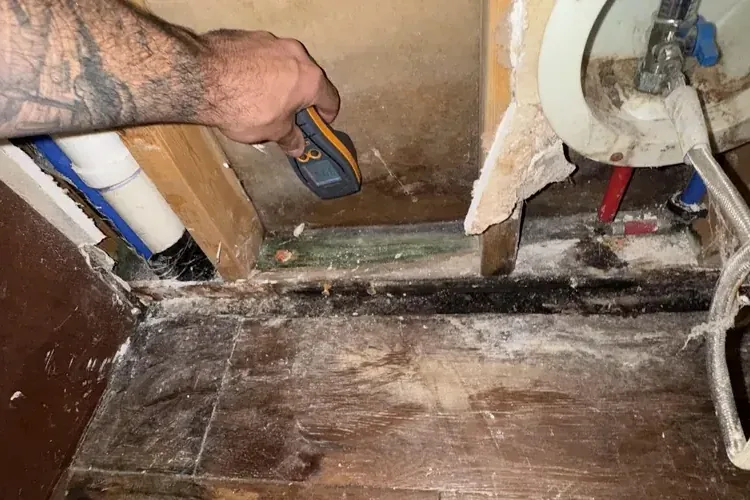
Between 1880 and 1930, an estimated 15,000 triple-deckers, also called three-deckers, were built in Boston and surrounding cities. In a wood-frame building of that kind, a single split supply pipe can send water down through the ceiling of every unit beneath it.
Key takeaways
- In a triple-decker the kitchens and bathrooms usually sit directly above each other, so the plumbing runs in one vertical stack from top to bottom.
- One burst supply pipe can wet the ceilings, walls and floors of every unit below it, not just the unit where it split.
- The first move is the shutoff: the unit's valve first, then the building main if water keeps coming.
- An extraction plan covers each affected floor, starting with standing water and the ceilings that are holding trapped water.
- Older city data splits Dorchester's buildings roughly evenly among single-family, two-family, three-family and condo units, so a leak often involves more than one household.
Why one burst pipe reaches every floor
In a typical triple-decker, the kitchens and bathrooms are kept directly above each other. The supply and drain plumbing therefore runs in a single vertical stack from the top unit down to the basement.
Nearly all non-modern triple-deckers in Boston are simple wood-frame buildings, with gable roofs on some and gambrel roofs on others. Wood framing carries water along joists and studs, and the floors between units are shared.
That layout is efficient to build, but it means a failure high in the stack can travel through each floor beneath it.
The first steps after a pipe splits
The shutoff comes before anything else. Every extra gallon becomes more wet plaster, more wet flooring and a longer drying job.
In the unit where the pipe split
The household closes the valve under the fixture first, then the unit's main valve if one exists.
- If water keeps flowing, close the building's main shutoff, often found in the basement.
- Move rugs, furniture and electronics off wet floors.
- Turn off power to a wet area only if the panel can be reached without stepping in water.
- Photograph the split pipe and the first wet areas.
In the units below
Water often pools above a ceiling before it shows, so the occupants below should be told right away.
- Stay clear of ceilings that sag or bulge.
- Do not poke a bulging ceiling, because it can hold a large amount of water and release it all at once.
- Move belongings out from under stains and place plastic sheeting over furniture.
- Leave wet ceiling lights and fans switched off.
A walk-through of how the water travels
Picture a supply pipe that splits in a top-floor bathroom wall. Water runs down the wall cavity, spreads across the bathroom floor and then moves along the joists into the ceiling of the middle unit.
From there it can follow the same stack down to the lowest unit.
At each floor the water meets new materials: plaster, wood flooring, cabinets and insulation. The plan therefore changes floor by floor, even though one pipe caused all of it.
- Top floor: the bathroom or kitchen floor and the walls around the split.
- Middle floor: ceilings, light fixtures and wall cavities.
- Lowest floor: ceilings, walls and flooring.
- Basement and stairwell: the shared areas at the bottom of the stack.
How the extraction plan covers each floor
Extraction follows the path of the water. The extraction crew removes standing water first, then opens the places where water is trapped.
Details of the work appear under water extraction.
A ceiling that bulges with trapped water can collapse, so the crew relieves it in a controlled way before it lets go. Wet insulation and sagging drywall or plaster are cut out so the cavity can dry.
- Standing water is pumped or vacuumed from floors and carpet.
- Bulging ceilings are opened at a low point to release trapped water.
- Wet insulation is removed, because it holds water against the framing.
- Wall cavities below the break are checked with moisture meters and thermal imaging.
What gets dried and what gets replaced
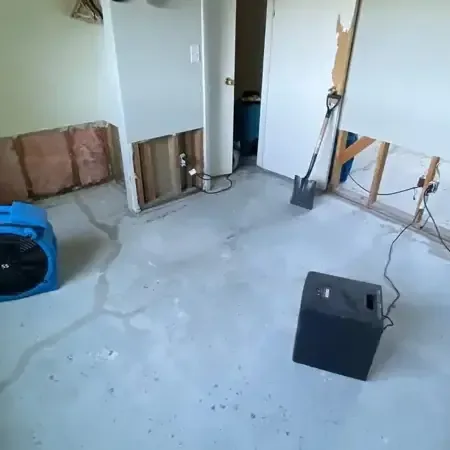
Wood framing and subfloors usually dry in place when the water is caught early. Materials that wick water and break down, such as carpet pad, insulation and soft drywall, are replaced.
Each unit is dried on its own readings. The drying team places dehumidifiers and air movers in every affected unit and checks them at each visit, so a dry apartment does not hide a wet cavity below it.
The ceiling side of the job is covered in ceiling leak water damage.
- Hardwood and plank floors: checked for cupping and dried with mats or panels when possible.
- Cabinets and baseboards: removed where water is trapped behind them.
- Wall cavities: opened when readings show moisture inside.
- Carpet pad and insulation: replaced.
When the building has several households
Older city data splits Dorchester's residential buildings roughly evenly among single-family homes, two-family homes, three-family homes and condo units. A burst pipe in a three-family building often involves an owner, one or two tenants and an insurer.
Clear communication saves time. The household where the pipe split should tell the others, and each unit should record what it lost.
- A shared photo folder for all units.
- The names and contact details of each unit's occupants, for the restoration team.
- A list of damaged belongings for every unit.
- A note of who controls which shutoff valve.
Preventing a repeat
After the repair, the household can learn where each shutoff valve is and test it. Supply hoses and old valves are common weak points, and replacing them is a small job compared with another loss.
In cold weather, a split pipe in an exterior wall may be a frozen pipe rather than a worn fitting. The cleanup is the same, but the repair differs.
More on local service appears on the Dorchester water damage pages.
Questions
Where does the water go when a pipe bursts in a triple-decker?
Down. Water follows framing, pipe openings and gaps in the floors into the unit below, and it can pool above a ceiling before it shows. That is why every unit under the break gets checked.
Should the ceiling below be punched open?
A bulging ceiling can hold a large amount of water. Opening it at a low point in a controlled way releases the water and lets the cavity dry. Doing it without protection can bring plaster and water down at once, so it is best left to the crew.
Which valve shuts off a single apartment?
Many apartments have a shutoff for the unit or valves under each fixture. If the water keeps flowing, the building main stops everything. Knowing where each valve sits before a loss saves time.
How long does it take to dry a multi-floor spread?
Drying often runs several days and is set by readings in each unit. Framing, subfloors and plaster dry at different rates, so the drying team keeps checking until the readings match a dry reference.
Does insurance cover a burst pipe?
Coverage depends on the policy and the cause. Many policies treat a sudden pipe failure differently from long-term seepage. Photographs and readings support the claim.
Who should be told first when a pipe bursts?
The occupants of the units directly below the break, then the owner or property manager. People below may not see the water for some time, and a bulging ceiling is a hazard.