Structural Drying in Mission Hill, MA
After the water is out, the building is still wet inside. The drying team sets air movers and dehumidifiers for plaster, framing and old masonry, and logs readings on every visit until each material is dry.
(888) 480-6221Start a measured dry-out plan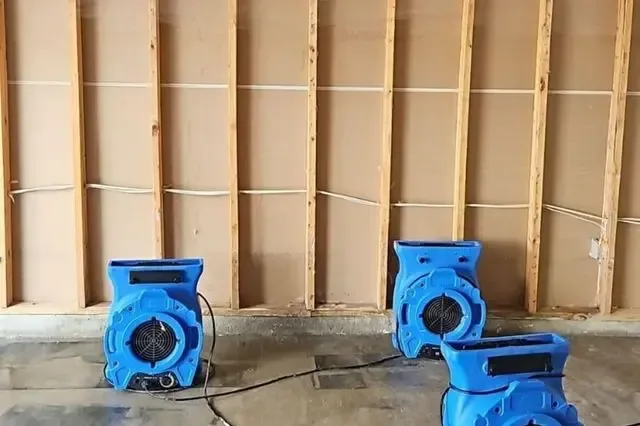
First steps for structural drying and dehumidification in Mission Hill
- Keep the heat on. Steady indoor warmth helps materials release moisture.
- Leave the equipment alone. Air movers and dehumidifiers should run without interruption.
- Keep windows closed. A closed drying zone works faster than one open to outdoor air.
- Expect daily readings. The crew returns to take readings and adjust equipment.
How structural drying and dehumidification is handled, start to finish
Set zones
Wet areas become drying zones.
Place equipment
Air movers and dehumidifiers go in.
Read daily
Moisture numbers are logged.
Remove at dry
Equipment leaves once readings pass.
Mission Hill's housing is mostly late-19th-century brick row houses and triple-deckers, many sitting on puddingstone foundations. Plaster over lath, thick old framing and stone hold water longer than newer drywall and lumber, so a drying plan built for modern construction can leave moisture behind. Brick and stone absorb water slowly and release it slowly too.
How drying plans account for older construction
The drying team sets target readings for each material rather than one number for the whole building, and places air movers to push air across wet surfaces while dehumidifiers pull the moisture out of the room. Cavities behind plaster and under old floors get their own attention.
Water that stays in plaster and framing keeps causing damage, so measured drying should not wait.
(888) 480-6221Plan the dry-out with the crewWhat is monitored
- Moisture content in framing, subfloors and plaster
- Humidity and temperature in each drying zone
- Equipment placement and changes from visit to visit
- Final readings that show each surface reached its dry target
What happens if drying stops early
Damp framing and plaster left behind invite mold in a day or two and slow the repairs that follow, which is why equipment stays until readings pass. Water extraction comes first, and drying follows. Plastic sheeting and containment keep humidity from drifting into dry rooms or neighboring units, which matters in buildings that share walls. Lower levels with stone walls, as in basement flooding cleanup, usually run the longest.
What does structural drying and dehumidification cost in Mission Hill, MA?
Drying cost follows the number of rooms, the type of materials and how long they take to reach dry readings. Dense plaster and masonry cost more than a single wet room of drywall.
One room, Class 1 or 2
- Air movers
- One dehumidifier
- Daily readings
Several rooms
- Cavity drying
- Multiple dehumidifiers
- Moisture logs
Plaster or masonry, Class 4
- Specialty drying
- Extended run time
- Final readings
Ranges, not a quote. Category of water, square footage, material class and how fast drying started move the number most. Run the water damage cost calculator for a closer range.
What separates a real dry-out from a fan and a mop
Dispatch at any hour
Active water is treated as urgent around the clock, and the extraction crew rolls with pumps, hoses and drying gear already on the truck.
IICRC S500 drying
Moisture is mapped first, then air movers and LGR dehumidifiers are sized to the class of loss, not guessed from the doorway.
A claim file built daily
Timestamped photos before demolition, daily psychrometric logs and a line-item scope go into the file an adjuster reviews.
Old-house know-how
Plaster and lath, older basements and stacked units in multi-family houses each dry differently, and the plan accounts for that.
Structural drying and dehumidification across Mission Hill and nearby neighborhoods
Structural drying covers buildings across Mission Hill, from the stone-footed houses near Alleghany Street and Tremont Street to the row houses and triple-deckers around Parker Street and Brigham Circle.
The same service nearby: structural drying and dehumidification in Jamaica Plain, Roslindale, Dorchester.
Water damage restoration in Mission Hill · every neighborhood covered
Related water damage services in Mission Hill
Structural Drying and Dehumidification questions, answered
Why does old plaster take longer to dry?
Plaster and lath are thick and absorb water deep inside, so surface readings can look normal while the interior stays damp. Probes catch it.
How loud is the equipment?
Steady fan-like noise. The crew places equipment to dry efficiently and adjusts for occupied units where possible.
Can drying be done without opening walls?
Sometimes. Small holes or removed baseboards let air reach wall cavities, but heavily soaked drywall and insulation usually come out.
What do the Class numbers mean?
They describe how much and how deeply materials got wet, from Class 1 for little moisture to Class 4 for dense materials like plaster and masonry.
Will the electric bill go up during drying?
Equipment draws power, so yes, though only for a while. The crew's equipment logs show how long it ran.
Still dealing with it?
Water that stays in plaster and framing keeps causing damage, so measured drying should not wait.
(888) 480-6221Plan the dry-out with the crewA building that looks dry can still be wet inside
The drying team sets equipment for each material, logs readings every visit and pulls it only when the numbers pass.
(888) 480-6221Call the drying team nowWhere crews work
Southwest Boston, Suffolk County
ZIP 02130 and nearby neighborhoods
Phone, 24/7
(888) 480-6221Hours
Dispatch 24 / 7 / 365